
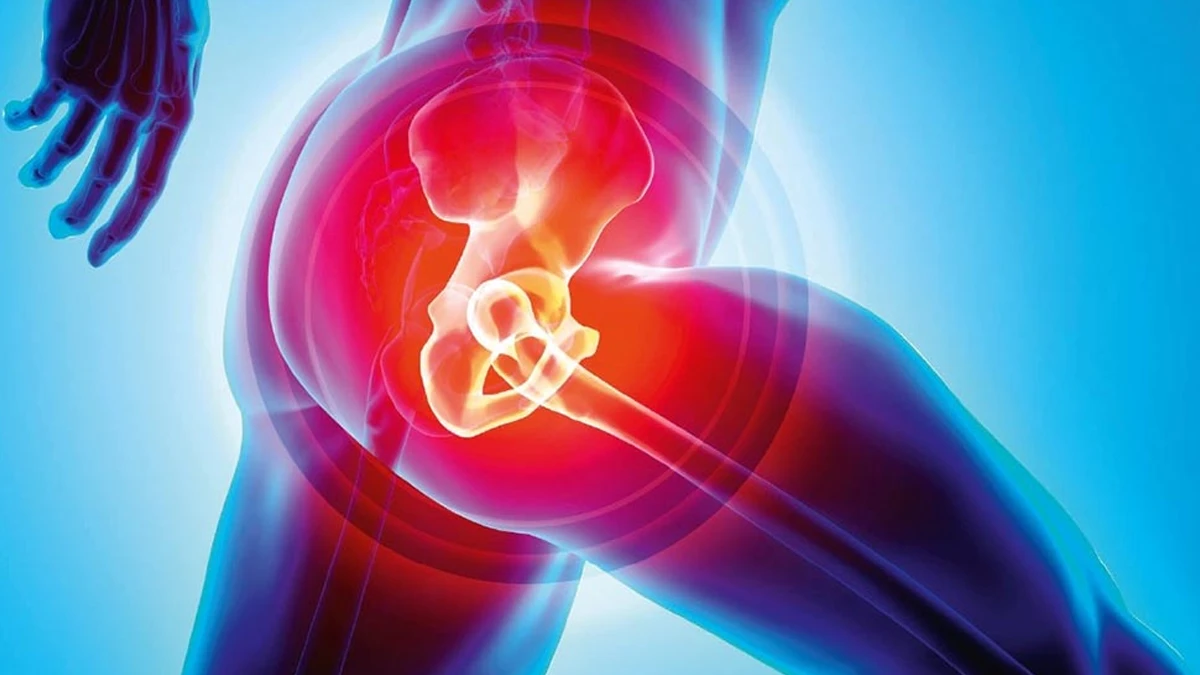
Where does hip pain come from?
The hip joint is a ball-and-socket joint formed by the head of the thigh bone and the socket in the pelvis. Pain arising from this structure is mostly felt in the groin; pain on the outer side, by contrast, often comes from structures outside the joint.
Reading the location of the pain correctly matters in the diagnosis:
- Groin pain: Usually arises from within the joint — osteoarthritis, impingement, cartilage and labral problems.
- Pain on the outer side: May arise from tendons and bursae outside the hip.
- Pain radiating from the hip into the leg: May originate in the lower back; see sciatica.
This distinction is made by examination; pain originating in the lower back can be mistaken for a hip problem and time lost as a result.
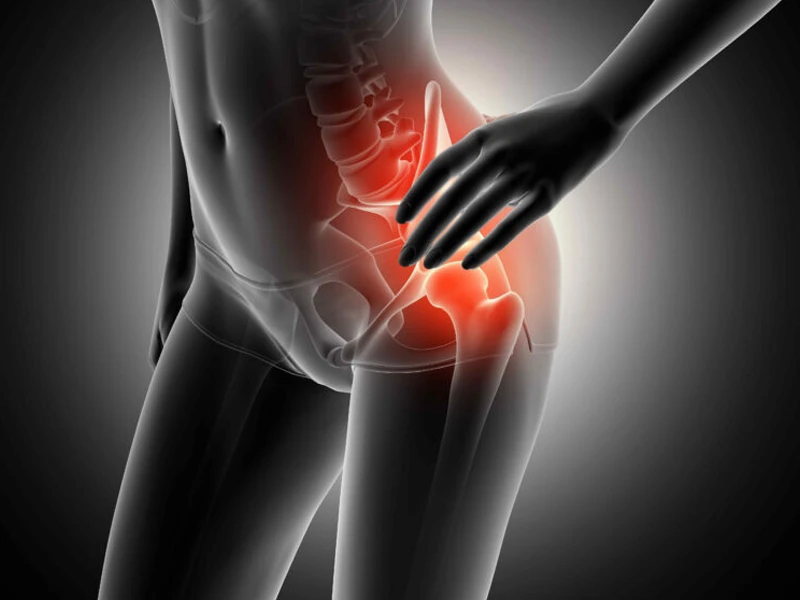
Hip osteoarthritis
Osteoarthritis is the thinning over time of the cartilage that covers the joint surface. As it progresses in the hip, pain in the groin, morning stiffness, a shortened walking distance and difficulty with movements such as tying shoelaces appear.
At the early and moderate stages treatment proceeds with non-surgical options: weight management, an appropriate exercise programme, physiotherapy and medication. Intra-articular procedures and regenerative methods may be considered at this stage.
When the joint surface has worn to a large extent and the pain restricts daily life, hip replacement comes onto the agenda.
Hip impingement and labral problems
Hip impingement is the catching of the head of the thigh bone against the rim of the socket during movement. Small differences in the shape of the bony structure can lead to this catching.
Repeated catching can cause a tear in the cartilage rim (labrum) at the edge of the socket and, over time, damage to the joint cartilage. It is usually seen in young and active people.
The symptoms are deep pain in the groin, discomfort that increases after sitting for a long time, difficulty squatting and an occasional sensation of catching. The diagnosis is made by examination and imaging; treatment begins with activity modification and physiotherapy, and in selected cases an arthroscopic procedure is considered.
When does surgery come onto the agenda?
The decision to operate on the hip varies according to the type and stage of the problem:
- Joint-preserving procedures: Can be carried out in impingement and labral problems while the joint cartilage is still preserved.
- Replacement surgery: Comes onto the agenda in advanced-stage osteoarthritis, avascular necrosis and after certain hip fractures.
- Fracture surgery: In hip fractures, fixation or the replacement option is considered; see traumatology.
The decision is made by assessing together the effect of the pain on daily life, the imaging findings, and the person's age and expectations.
Examination and treatment process
-
History and physical examination
The site of the pain, walking distance, range of motion and impingement tests are assessed; pain originating in the lower back is distinguished.
-
Imaging
The joint space and bony structure are examined with X-ray and, where necessary, the cartilage, labrum and bone viability with MRI.
-
Treatment plan
Non-surgical options are prioritised; if surgery is required, the method is discussed together with the reasons for it.
-
Follow-up
An exercise and activity plan is given and the response is assessed at regular intervals.
Frequently asked questions
Why is hip pain felt in the groin?
Could my hip pain be coming from my lower back?
Is a replacement essential in hip osteoarthritis?
Is hip impingement seen at a young age?
What imaging is needed for hip pain?
Which department should I go to for hip pain?

Treating physician
Prof. Dr. Melih Malkoç
Specialist in Orthopaedics and Traumatology. Graduate of Ege University Faculty of Medicine; completed his specialist training at Şişli Etfal Training and Research Hospital and received the title of associate professor in 2015.
Full biography →The information on this page is for general guidance only and does not replace a diagnosis or treatment recommendation. Diagnosis and treatment decisions are made by the physician on an individual basis following examination and imaging.